In this chapter
The Bean Belt and global origins
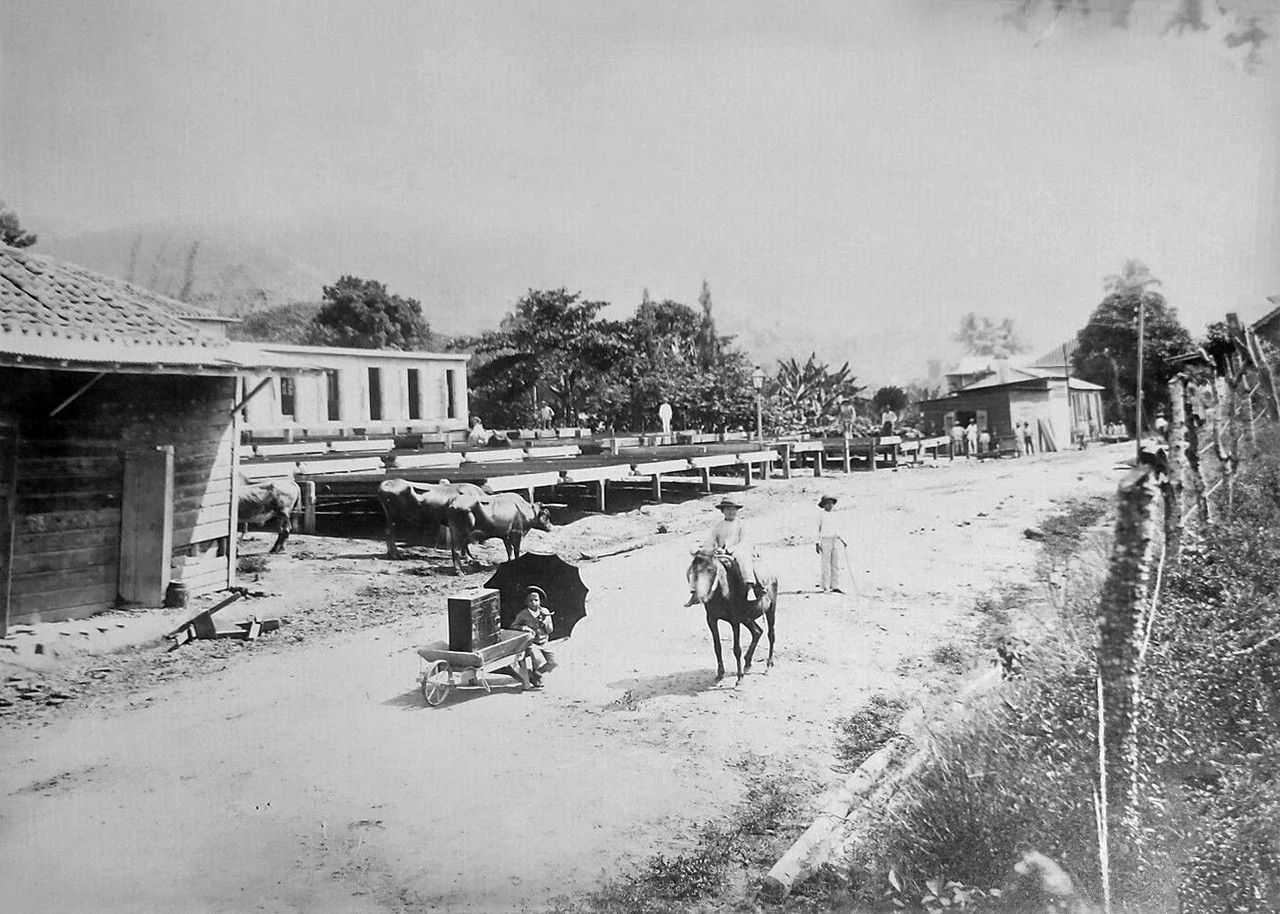
The global Bean Belt sits in tropical highlands between 25°N and 25°S: Ethiopia, Kenya, Colombia, Indonesia, Vietnam, Brazil, and 70+ other producing countries. ICO data for coffee year 2023/24 puts world output near 178 million 60-kg bags, about 102 million arabica and 75.8 million robusta. South America alone supplies over half.
Brazil and Vietnam together account for more than half of global volume. Brazil is forecast at roughly 69.9 million bags for 2024/25; Vietnam at about 29 million, with over 95% robusta. Singapore grows no coffee but runs a busy regional roasting and re-export trade. Shelf lots often route through Ho Chi Minh City, Jakarta, or Singapore port, so the origin label encodes this equatorial supply chain.
Arabica vs Robusta
Commercial coffee rests on Coffea arabica and C. canephora (Robusta). ICO 2023/24 figures: arabica ~57% of world volume, robusta ~43%; caffeine runs 1.2–1.5% vs. 2.2–2.7%. Arabica is native to Ethiopia, prefers 18–24°C means, and is rust- and drought-sensitive; robusta tolerates 22–30°C, common in Vietnam's Central Highlands and Brazilian lowland blends.
Specialty markets are almost entirely arabica, yet espresso and instant blends often include 10–25% robusta for crema and body. Singapore's traditional kopi leans on robusta; specialty cafés sell single-origin arabica. Knowing the two species is step one for reading any menu.
Varietals and cultivars
Dozens of arabica cultivars differ in yield, disease resistance, and cup quality. Bourbon brings sweetness and rounded acidity; Typica delicacy at lower yields; Geisha set auction records in Panama with jasmine and bergamot florals. Kenya's SL28/SL34 are famous for blackcurrant acidity; Colombia's Castillo and Costa Rica 95 resist leaf rust.
World Coffee Research maintains an open-access global varieties catalog covering 55 arabica and 47 robusta entries with yield, optimal altitude, nutrition, and disease data. Trees live 20–30 years—wrong variety choice is costly. WCR-bred F1 hybrids like Starmaya and Centroamericano aim to balance flavor, yield, and disease resistance.
Altitude and terroir
Specialty arabica often grows at 1,200–2,200 m, where 10–15°C diurnal swings slow cherry maturation and concentrate sugars and organic acids. Ethiopia's Yirgacheffe (1,800–2,200 m) shows citrus florals; Colombia's Huila (1,500–1,900 m) balances sweetness; Guatemala Antigua (1,500–1,700 m) leans nutty and chocolatey.
Bean density rises with elevation, demanding more roast energy and development time; the same SL28 at 1,200 m vs. 1,800 m can cup like two different coffees. WCR's catalog tags each cultivar with optimal altitude bands—SL28, for example, is rated for >1,300 m for best quality. Terroir is the combined cup fingerprint of elevation, slope, rainfall, and soil.
Soil and nutrition
Coffee prefers well-drained volcanic or lateritic soils at pH 5.5–6.5; shallow roots rot in standing water. Potassium builds sugars, phosphorus supports root development, excess nitrogen pushes foliage over fruit yield. SCA and origin extension services recommend soil testing every 1–2 years with tailored fertilization.
Indonesia's Sumatran volcanic ash gives Mandheling its heavy body; Brazil's Cerrado oxisols suit large mechanized estates; Kenya's bright acidity often comes from iron-rich red soils. Sustainable farms use compost, cover crops, and shade-tree leaf litter to keep organic matter above 3–5%, improving water retention and microbial health.
Climate and microclimate
Coffee wants 1,500–2,500 mm annual rainfall plus a 2–3 month relative dry season to trigger flowering and concentrate harvest. Frost is arabica's enemy—Brazil's 2021 southern Minas frost lifted futures over 30%. FAO and IPCC research suggests suitable arabica area may shrink 50%+ by 2050, driving shade investment, drought-tolerant varieties, and upslope migration.
Within one region, valley fog belts, windward slopes, and canopy microclimates create cup differences: fog slows ripening and lifts acidity; windward slopes drain well with stronger sun. Farmers increasingly use weather stations and satellite data to time flowering windows and labor—field decisions that surface on Singapore roaster labels as "crop year" and "fresh arrival" timing.
Shade management
Traditional shade systems plant coffee under banana, Inga, or native canopy at 30–70% cover, lowering crown temperature 2–5°C, cutting evaporation, and sheltering birds and insects. Rainforest Alliance certification requires minimum native tree cover and riparian buffers.
Full-sun systems yield more—often 20–40% higher—but need heavier fertilizer, weeding, and pest control with greater erosion risk. Guatemala and El Salvador are famed for shade-grown complexity; Brazilian estates often run high-density sun systems for volume. A "shade-grown" label in Singapore usually signals ecological intent and slower maturation, though it is not alone a quality guarantee.
Nursery and propagation
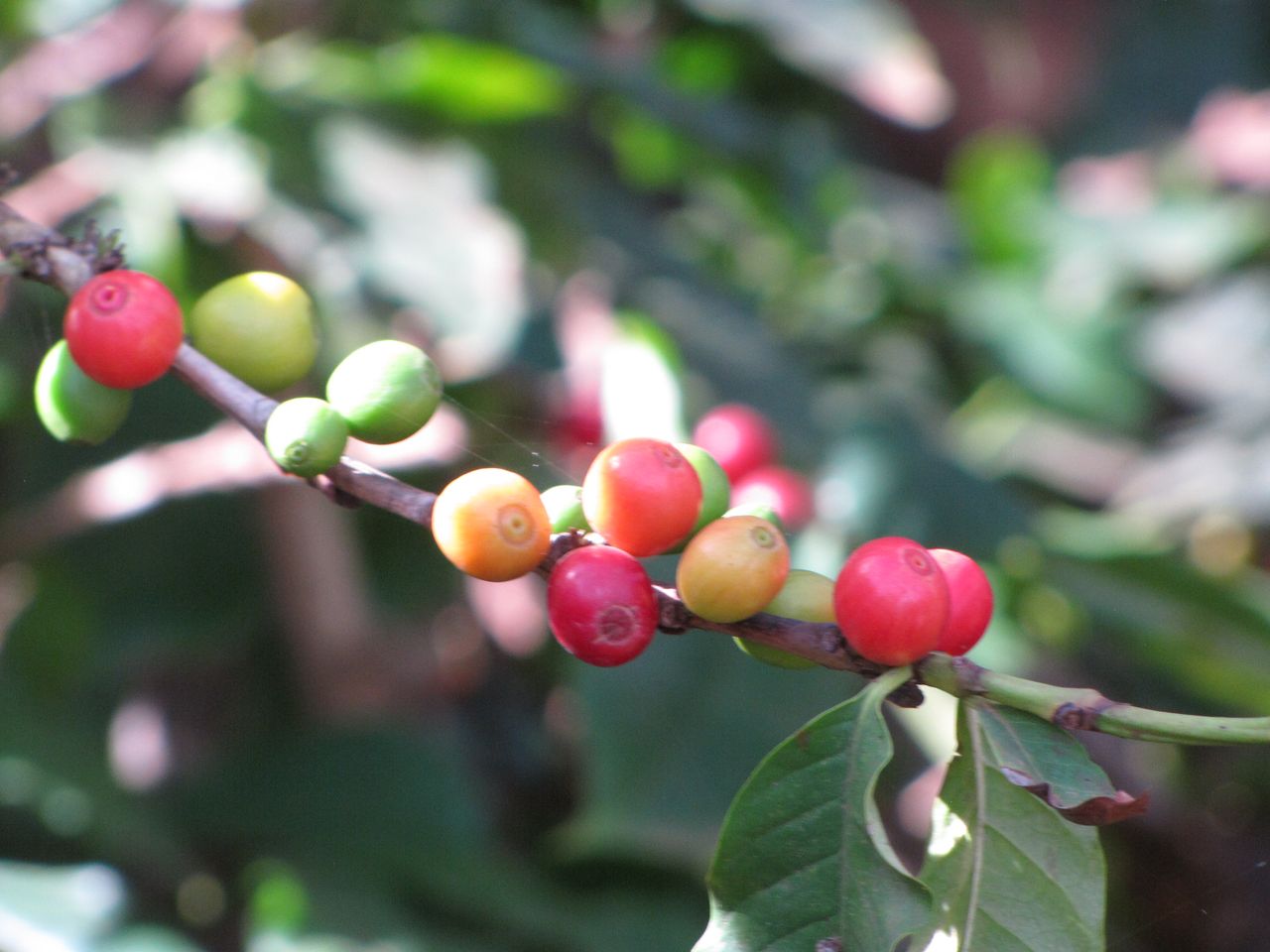
Farmers germinate seeds in nursery beds, transplant seedlings with two true-leaf pairs into bags, then field-plant after 6–12 months under shade netting. Cuttings or grafting preserve varietal purity and avoid seed genetic drift; commercial nurseries use insect screens to block berry borer and other pests.
Trees need 3–4 years before first commercial cherry; peak production lasts ~15–20 years before renewal. Stumping rejuvenates trees but costs 2–3 years of yield. WCR notes that with decades-long tree life, nursery variety verification and disease quarantine are where supply-chain quality control begins—one infected seedling can compromise an entire farm.
Pests and disease
Coffee leaf rust (Hemileia vastatrix) is arabica's greatest threat—the 2012 Central American outbreak cut Guatemala and El Salvador yields over 15%. The coffee berry borer (Hypothenemus hampei) drills ripe cherries, creating moldy and fermented defects costing billions yearly. Coffee berry disease (CBD) mainly hits African origins.
Integrated pest management combines resistant varieties, shade adjustment, traps, biocontrol, and targeted low-toxicity sprays. WCR-bred F1 hybrids like Starmaya and Milenio aim to balance flavor, yield, and rust resistance in trial farms worldwide. For Singapore roasters, major disease years at origin show up directly in green-coffee availability and import pricing.
Sustainability and certifications
Organic certification bans synthetic inputs with a typical 3-year conversion. Fairtrade's 2024 floor price is US$1.80/lb arabica and US$1.20/lb robusta plus community premiums. Rainforest Alliance stresses ecology, biodiversity, and labor safety across millions of hectares of coffee land.
Lifecycle assessments show fertilizer production and land-use change at farm stage drive much of coffee's carbon footprint; shade systems and reduced nitrogen cut emissions significantly. Direct trade and traceability let roasters bypass brokers and return premiums to farmers—more Singapore specialty roasters now publish farm names, elevation, and processing so consumers can trace back to planting decisions.
Singapore lens: origins and imports
Singapore café menus label Yirgacheffe, Huila, Mandheling—each name encoding variety, elevation, shade, and fertilization choices. Northern Hemisphere main crops land October–March; Southern Hemisphere roughly April–September; "fresh crop" usually means green arrival within 3–6 months of harvest.
Singapore port handled 37+ million TEU in 2023 as a regional transshipment hub; roasters source directly from Indonesia, Vietnam, Ethiopia, and the Americas or via regional traders. Understanding planting is the decoder ring for origin labels: "1,800 m washed SL28" signals the bright, berry-toned acidity expected from high-elevation Kenyan cultivars.
References
- Puerto Rico — Coffee plantation (Wikimedia Commons) — Wikimedia Commons
- Coffea arabica nursery berries (Wikimedia Commons) — Wikimedia Commons
- World Coffee Research — Arabica Varieties Catalog — World Coffee Research
- ICO — Coffee Market Report April 2024 — International Coffee Organization
- SCA — Coffee Research — Specialty Coffee Association
- FAOSTAT — Coffee Production Data — Food and Agriculture Organization
- USDA FAS — Coffee: World Markets and Trade — USDA Foreign Agricultural Service
- Rainforest Alliance — Sustainable Coffee — Rainforest Alliance
- Fairtrade — Coffee Standards — Fairtrade International
- IPCC — Climate Change and Land (Chapter 5) — Intergovernmental Panel on Climate Change
- Perfect Daily Grind — Shade-Grown Coffee Explained — Perfect Daily Grind
- CABI — Coffee leaf rust (Hemileia vastatrix) — CABI Invasive Species Compendium